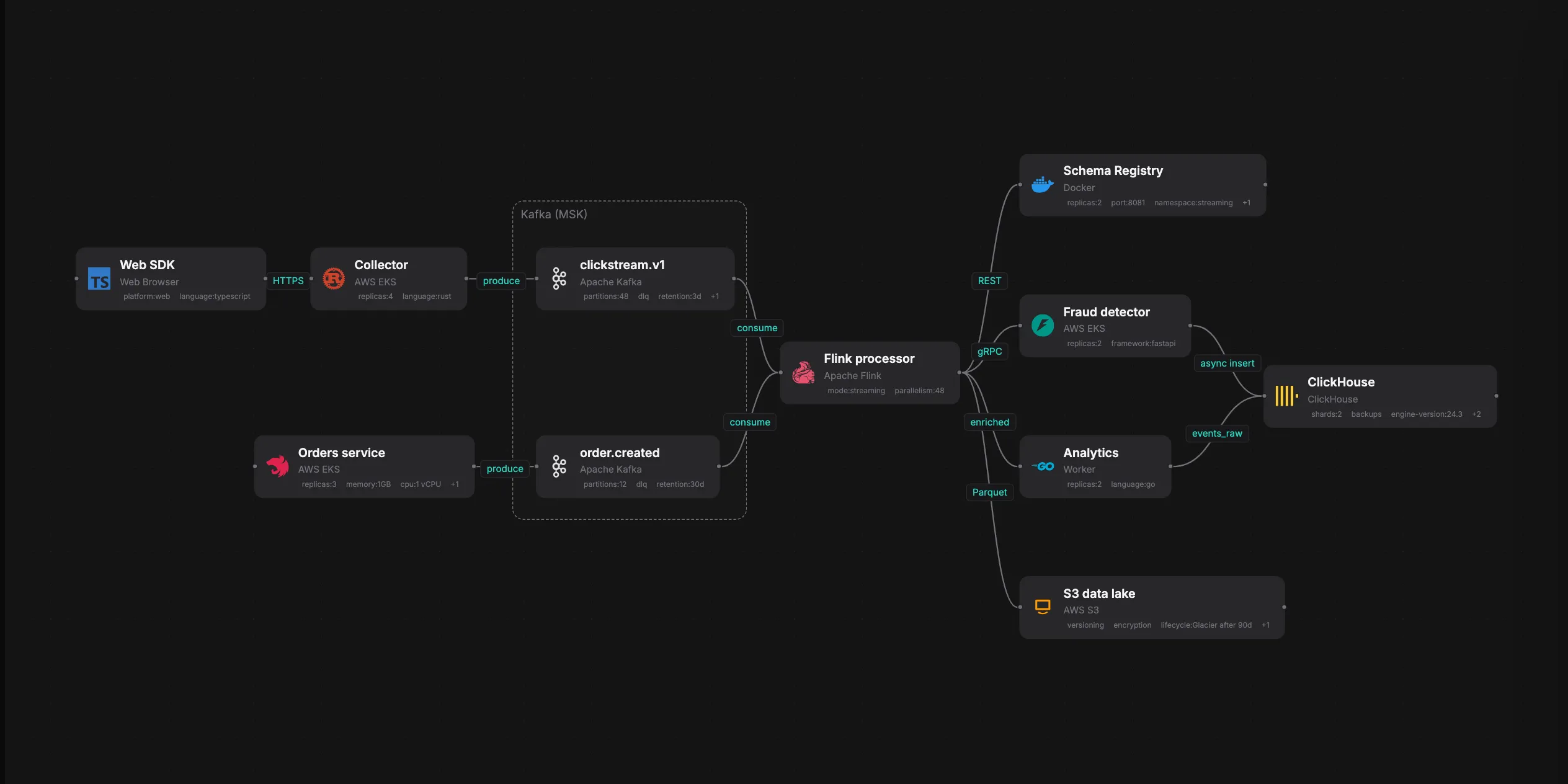
Draw your stack visually - services, databases, queues, data flows - and ship it
as a living spec your whole team can read, while your coding agent reads and
updates the same model over MCP.
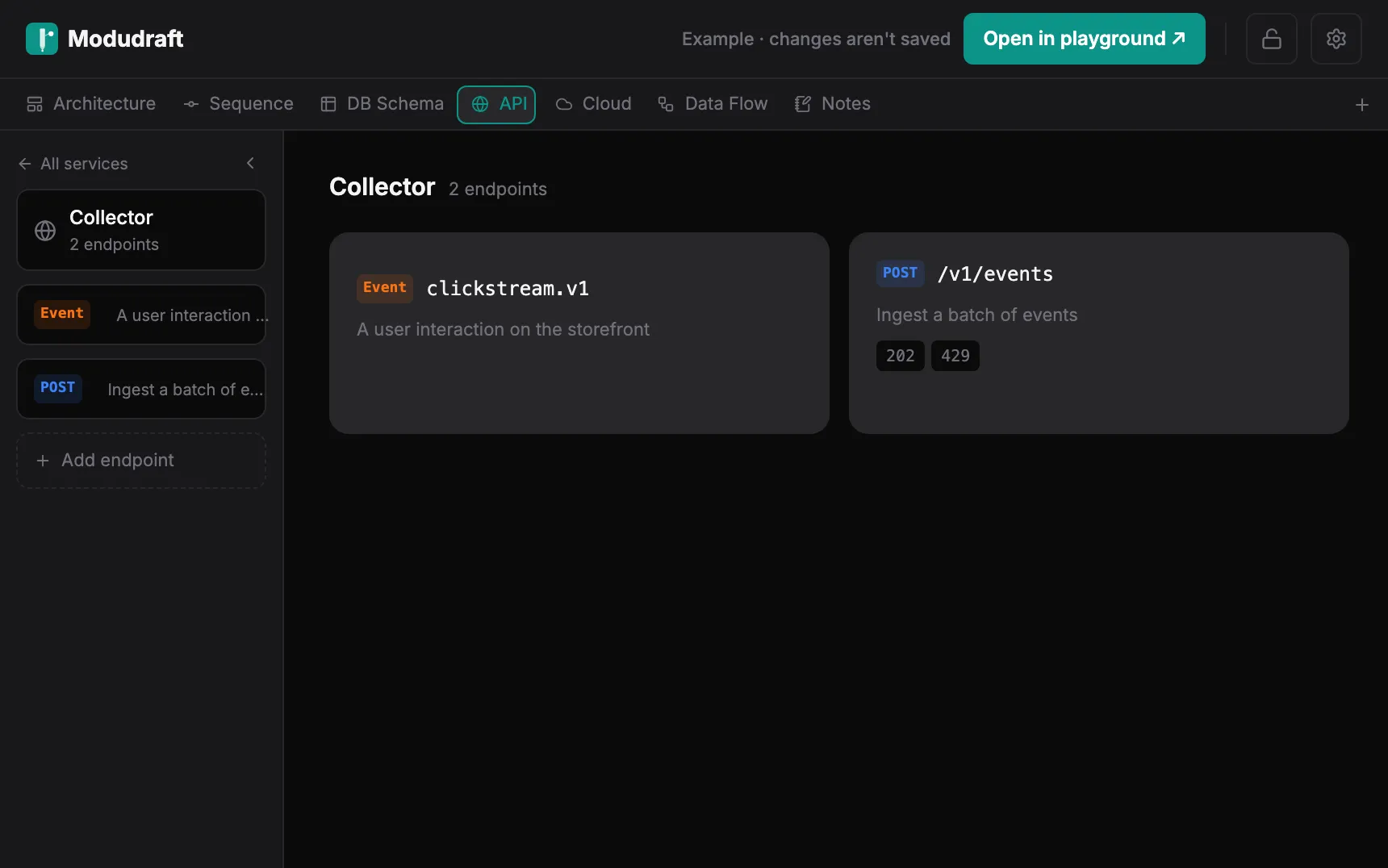
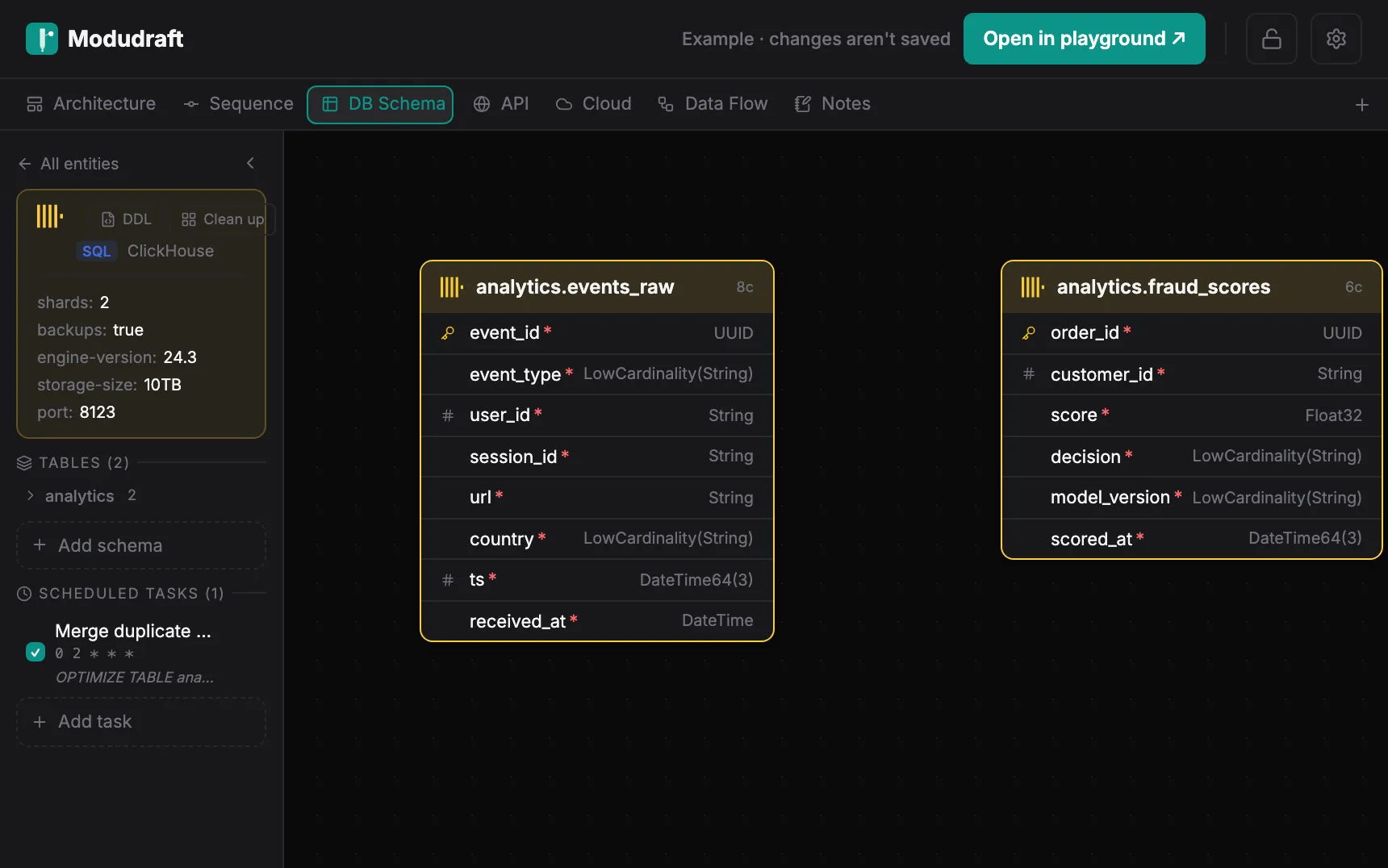
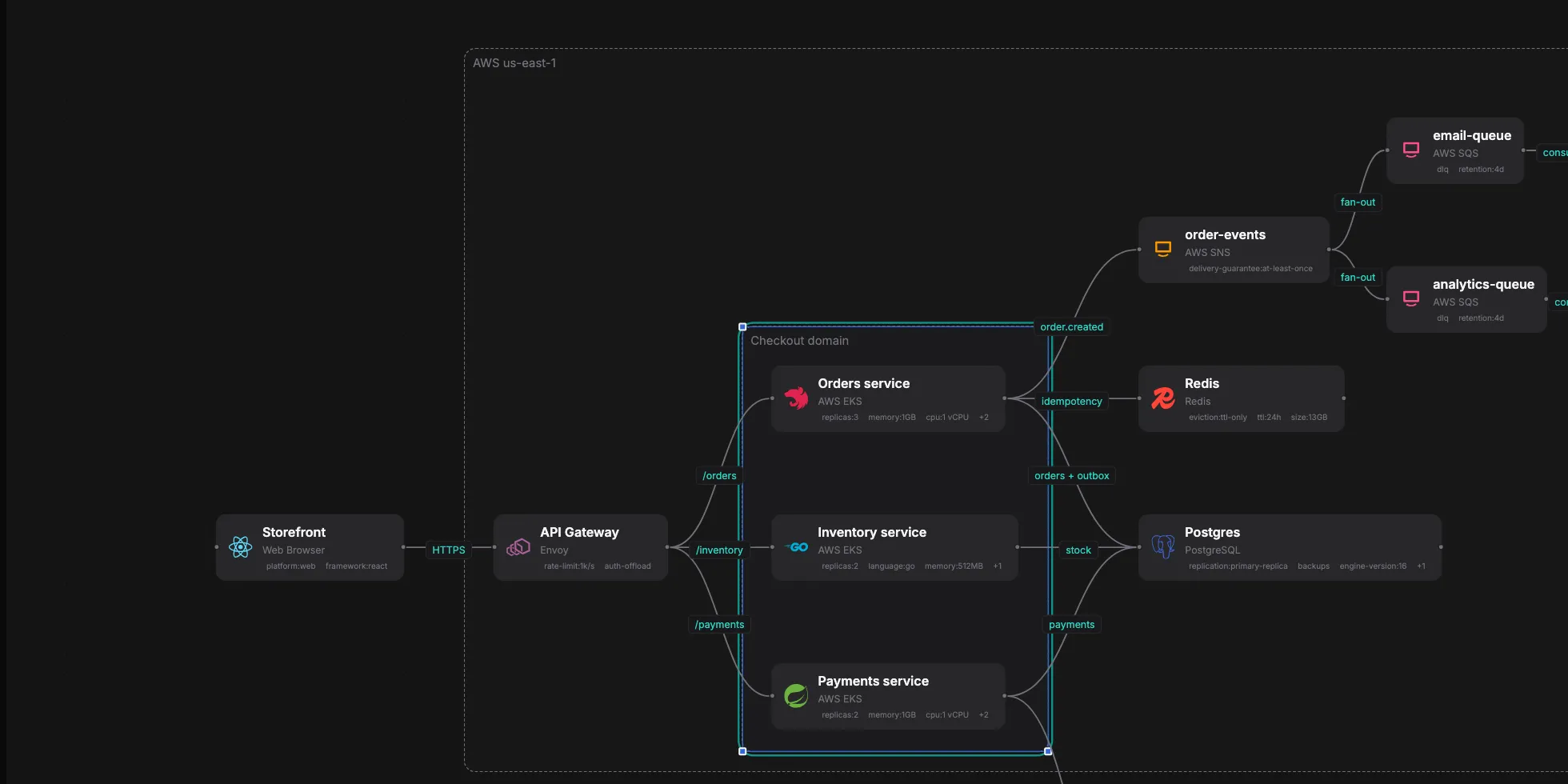
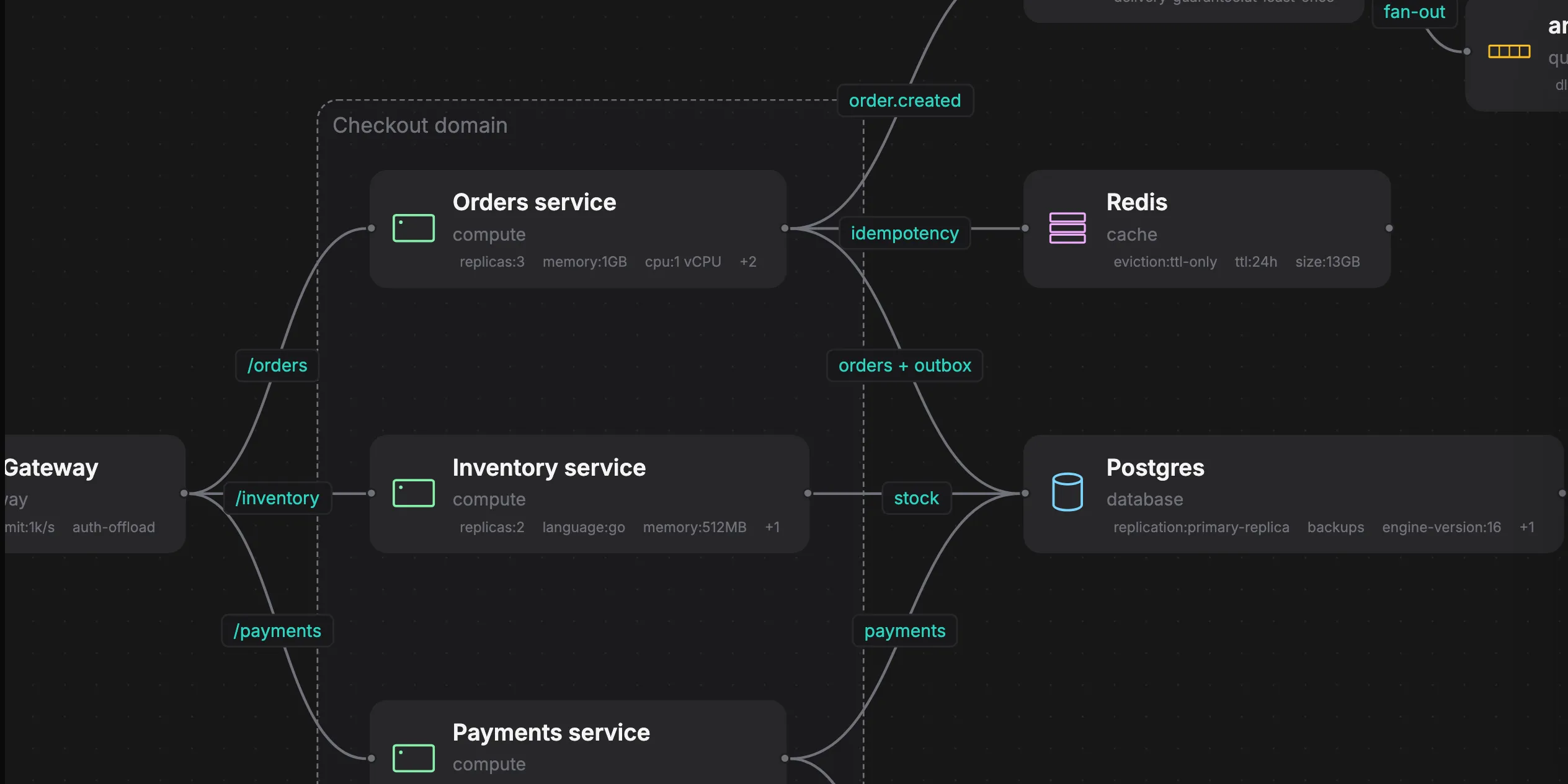
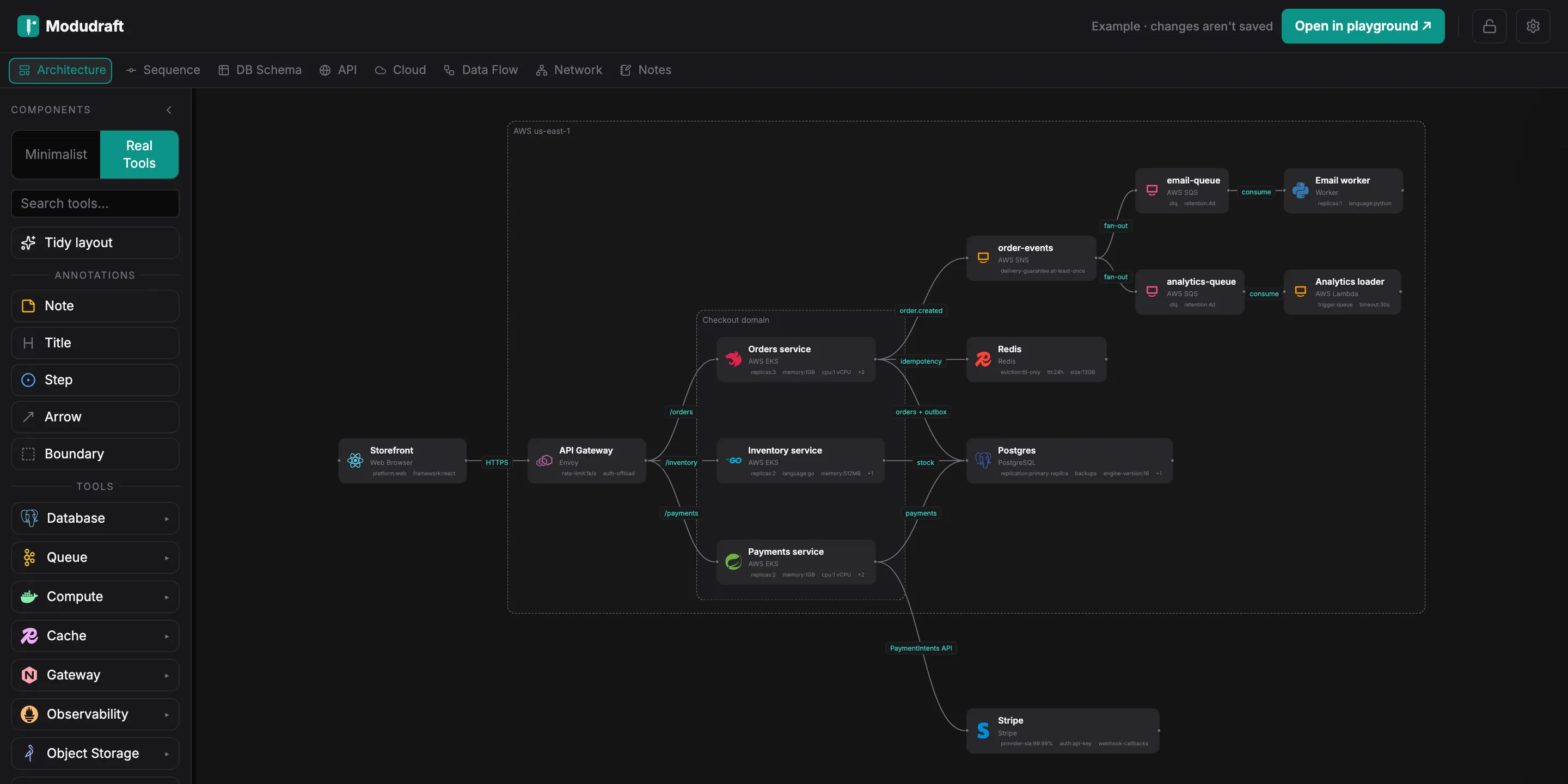
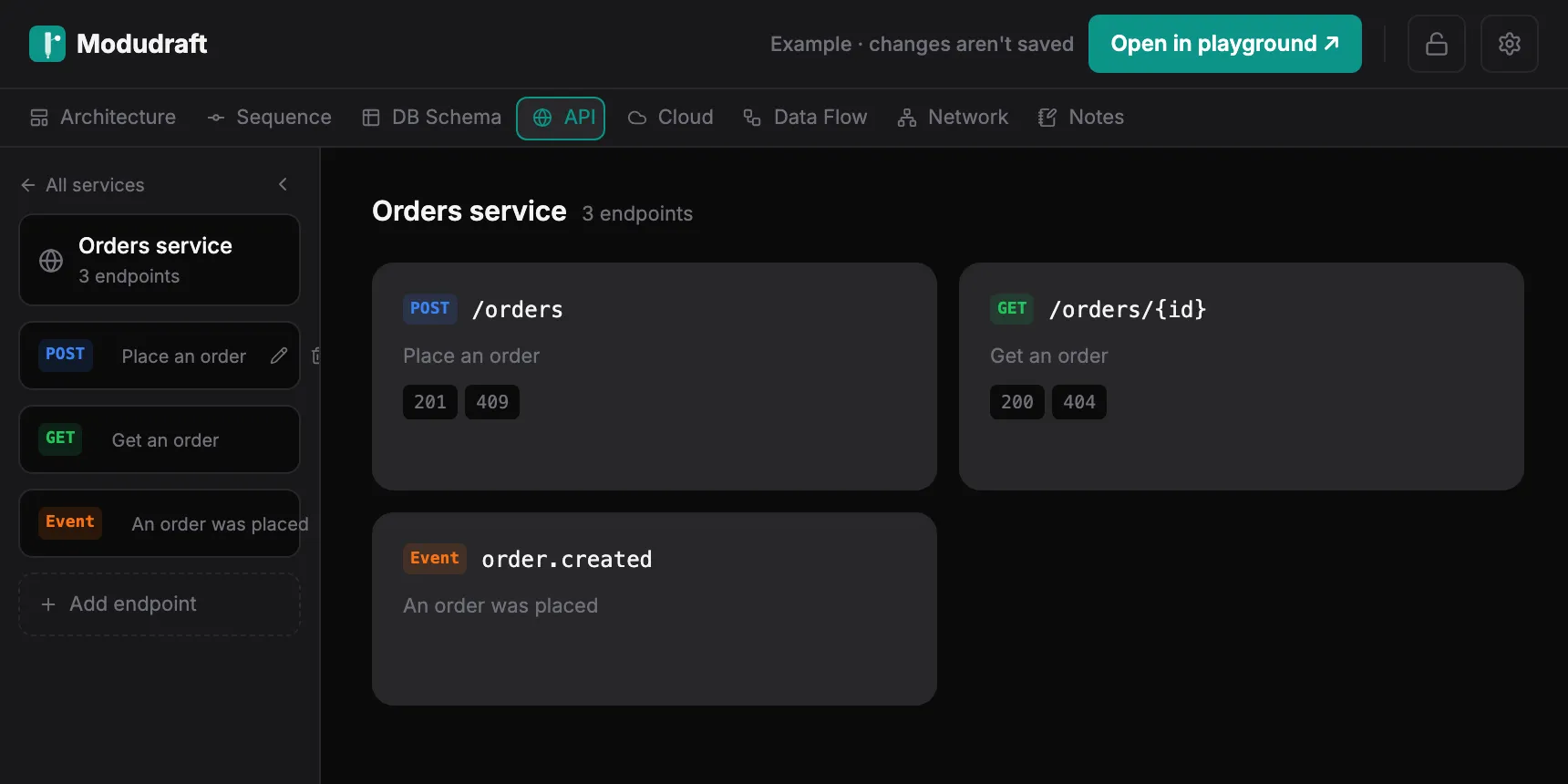
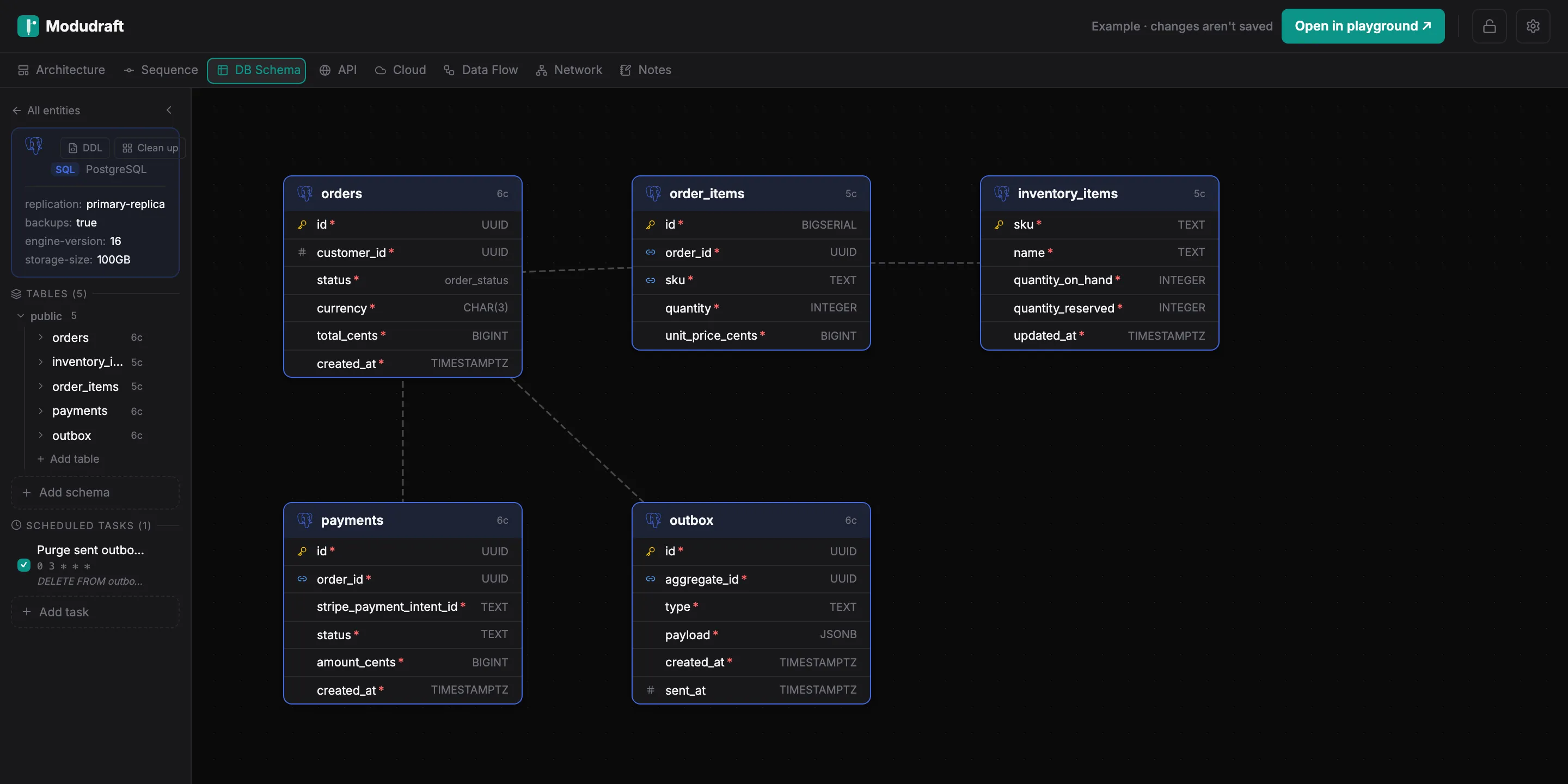
Click Orders service, then open the API and DB tabs: its contract and tables are linked to the same node.
Tip: press M in the editor to switch between real tool logos and minimal symbols.
Why Modudraft
One model. Eight views.
Other tools give your agent a canvas. Modudraft gives it a typed model of your system: endpoints and
sequence lanes belong to their service, tables to their database, all in one file across eight views.
Linked, not drawn
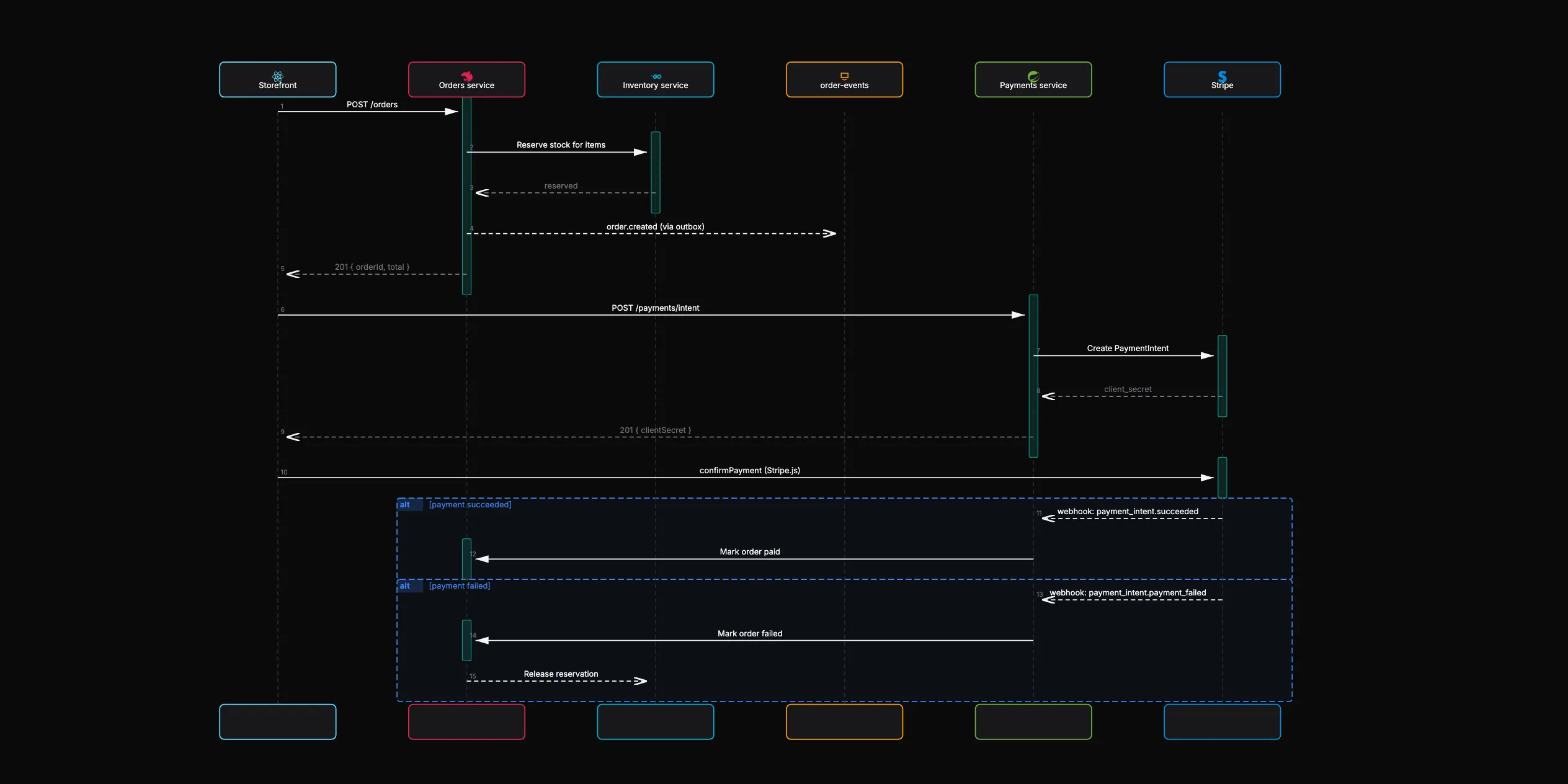
Select a service and the same object shows up with its contracts and sequence lanes, next to the database it writes to. Change it once.
Architecture · Orders serviceAPI · its contractsDB · the Postgres it writes toSequence · its checkout flow
Contracts that compile
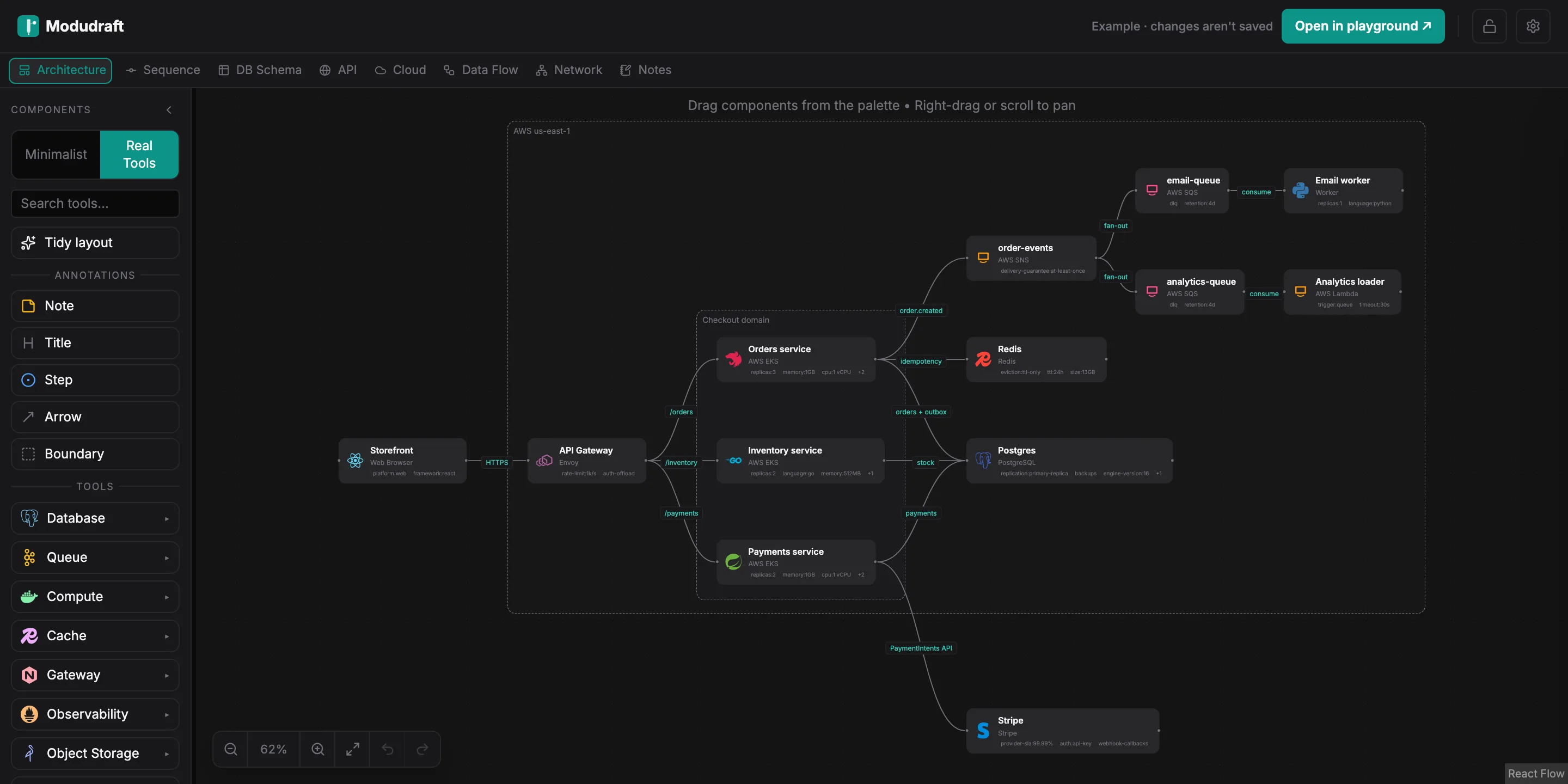
Define POST /orders once. Get every format, generated from the same contract:
What the editor shows for POST /orders · Tap to enlarge
openapi: 3.1.0info: title: E-commerce checkout API version: 1.0.0paths: /orders: post: summary: Place an order description: >- Reserves stock and creates a pending order. Retries with the same Idempotency-Key return the original order. tags: - orders - checkout - pii parameters: - name: Idempotency-Key in: header required: true schema: type: string format: uuid requestBody: required: true content: application/json: schema: type: object properties: customerId: type: string items: type: array minItems: 1 items: type: object properties: sku: type: string quantity: type: integer minimum: 1 required: - sku - quantity currency: type: string enum: - USD - EUR required: - customerId - items - currency example: customerId: string items: - sku: string quantity: 1 currency: USD responses: '201': description: Order created content: application/json: schema: type: object properties: orderId: type: string status: type: string enum: - pending - paid - failed - cancelled total: type: number required: - orderId - status - total example: orderId: string status: pending total: 0 '409': description: An item is out of stock content: application/json: schema: type: object properties: error: type: string message: type: string required: - error - message example: error: string message: string
A canvas that thinks at the level of systems - not pixels - so you spend
time on the design, not the tool.
Eight linked views
Architecture, sequence, DB, API, cloud, data flow, network and notes share one model, so endpoints, tables and sequence lanes stay attached to the nodes they belong to.
Contracts in every format
One API contract renders OpenAPI, AsyncAPI, GraphQL, proto, TypeScript and Pydantic.
Import from your code
Your agent turns Prisma, SQL, OpenAPI, Terraform, Kubernetes and more into the model.
Boundary grouping
Draw a boundary and the nodes inside it are grouped. Mark VPCs, teams or domains.
Share a link
Share any diagram with view or edit access, and revoke it anytime.
Import Mermaid, draw.io, Excalidraw and Visio
Bring existing diagrams in and keep editing them.
Notes your agent can write
A Markdown editor beside every diagram, for ADRs, runbooks and plans. Your agent fills it via set_notes.
Symbols or real logos
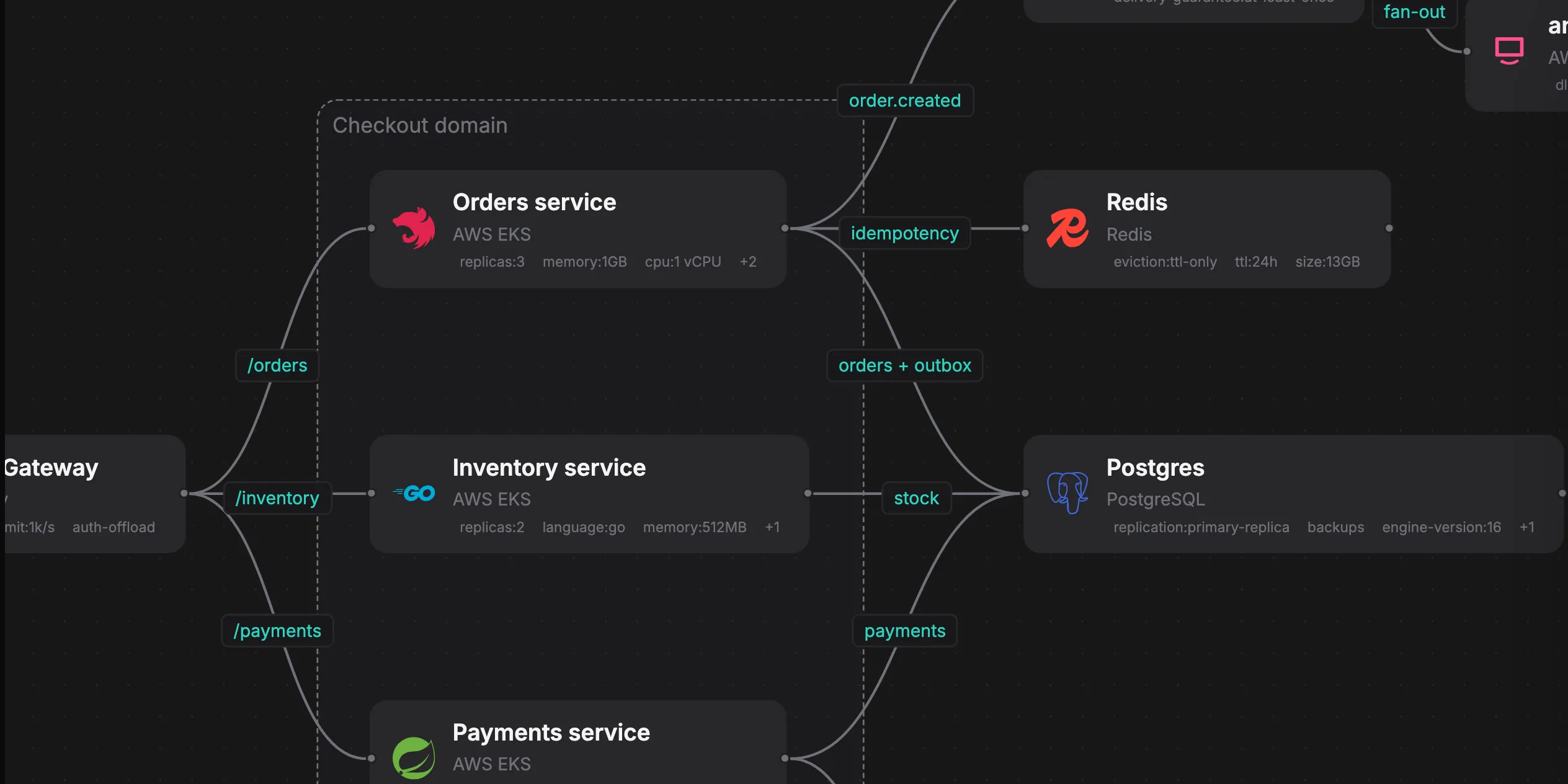
Press M to flip every node between engineering symbols and 370+ real tool logos.
SymbolsReal tools↔
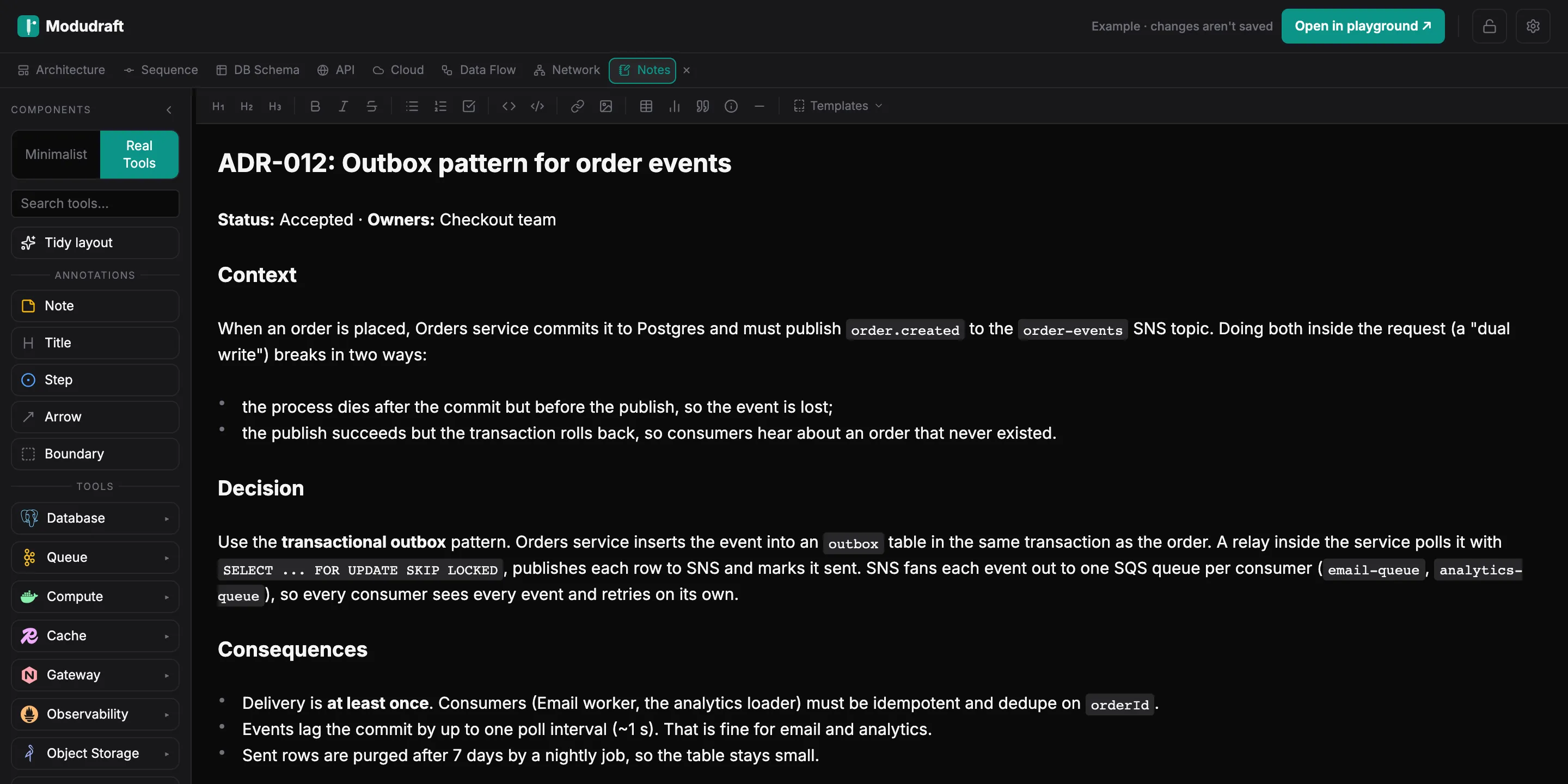
Same diagram, two looks. Switch any time with M.
MCP - Model Context Protocol
Let your AI agent draw the diagram
Connect Claude Code, Cursor or any MCP client. Your agent reads the model before it
codes, imports schemas and specs from your repo, adds endpoints with real contracts,
and flags source files that changed since the last import. You review; it does the
grunt work.


![Schema preview for the POST /orders request body, showing a fields table: customerId, items, items[].sku, items[].quantity and currency with their types, required flags and constraints](/examples/contract-preview.webp)